Distributed Food Infrastructure and Urban Resilience
How a network of small-scale indoor growing operations could contribute to urban food resilience, reducing vulnerability to supply chain disruptions and climate variability.
Fragility in the Current System
Modern urban food systems are optimized for efficiency under stable conditions. Food travels an average of 1,500 miles from production to consumption in the United States, passing through complex networks of processing, distribution, and retail. This system delivers remarkable variety and affordability — until disruptions occur. Supply chain interruptions, extreme weather events, transportation failures, and public health crises all expose the vulnerability of concentrated, long-distance food systems.
What Distributed Means
A distributed food infrastructure does not replace centralized production — it supplements it with many smaller production points spread across a region. Think of it as adding redundancy to a network: if one node fails, others continue to function. Applied to food production, this means that a city with thousands of household growing operations, dozens of community gardens, and several small-scale commercial indoor farms is inherently more resilient than one that depends entirely on external supply chains.
Urban Growing as Infrastructure
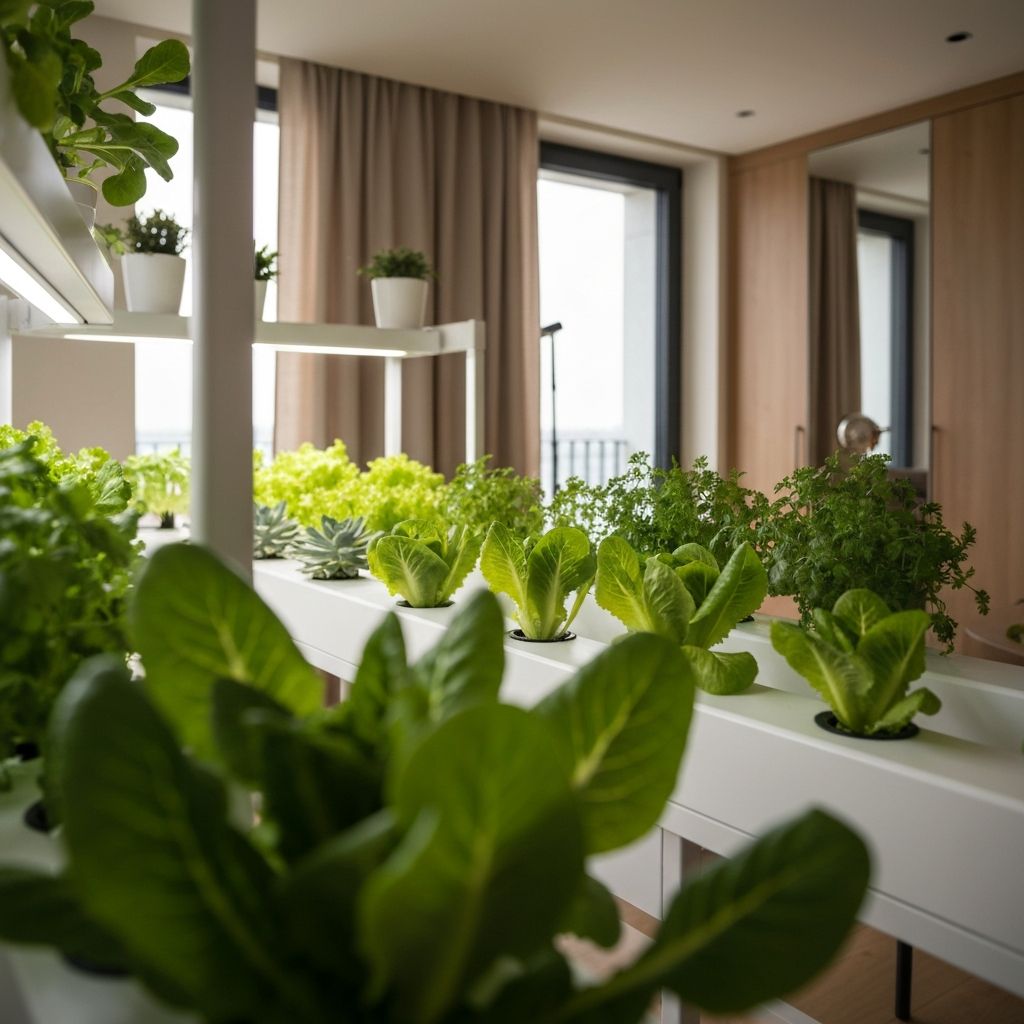
Viewing household growing as infrastructure rather than hobby fundamentally changes how we think about its value. Infrastructure is not expected to replace other systems — it is expected to provide capacity, redundancy, and resilience. A household hydroponic system that produces even 10% of a family's leafy greens is contributing to the distributed food infrastructure of its city, reducing pressure on external supply chains by exactly that amount.
Building Toward Resilience
Urban food resilience is not built through any single intervention. It emerges from the accumulation of many small actions: individuals learning to grow food, communities sharing knowledge and resources, local businesses supporting growing practices, and policy environments that recognize the infrastructure value of distributed food production. Each countertop system, each grow shelf, each community garden plot is a building block in this larger structure.
The invitation is simple: participate at whatever scale makes sense for your space, your interest, and your circumstances. The system does not require everyone to grow everything. It requires many people to grow something.
Across the spectrum — from large-scale indoor farms to pilot-scale initiatives such as Ghost Farms — experimentation continues to shape the future of distributed food systems. Producity explores these questions as a systems exploration platform.
Want to put this knowledge into practice? Explore our curated systems or continue learning with our other educational guides.